
Fictosexuality Explained: Attraction Beyond the Physical World
Let’s Start With the Obvious Question
If you’ve ever said you’re fictosexual — or even hinted that you’re mostly or exclusively attracted to fictional characters — you’ve probably been met with at least one of these responses:
- “Isn’t that just a crush?”
- “That sounds like escapism.”
- “But don’t you want something real?”
- “Isn’t that unhealthy?”
So let’s clear something up right away:
Fictosexuality isn’t about being confused, broken, immature, or avoiding reality.
It’s about where attraction happens for you — emotionally, narratively, psychologically — not whether you understand reality.
This post is here to explain fictosexuality without pathologizing it, and without pretending it’s something new or strange.
What Fictosexuality Actually Means (In Normal Language)
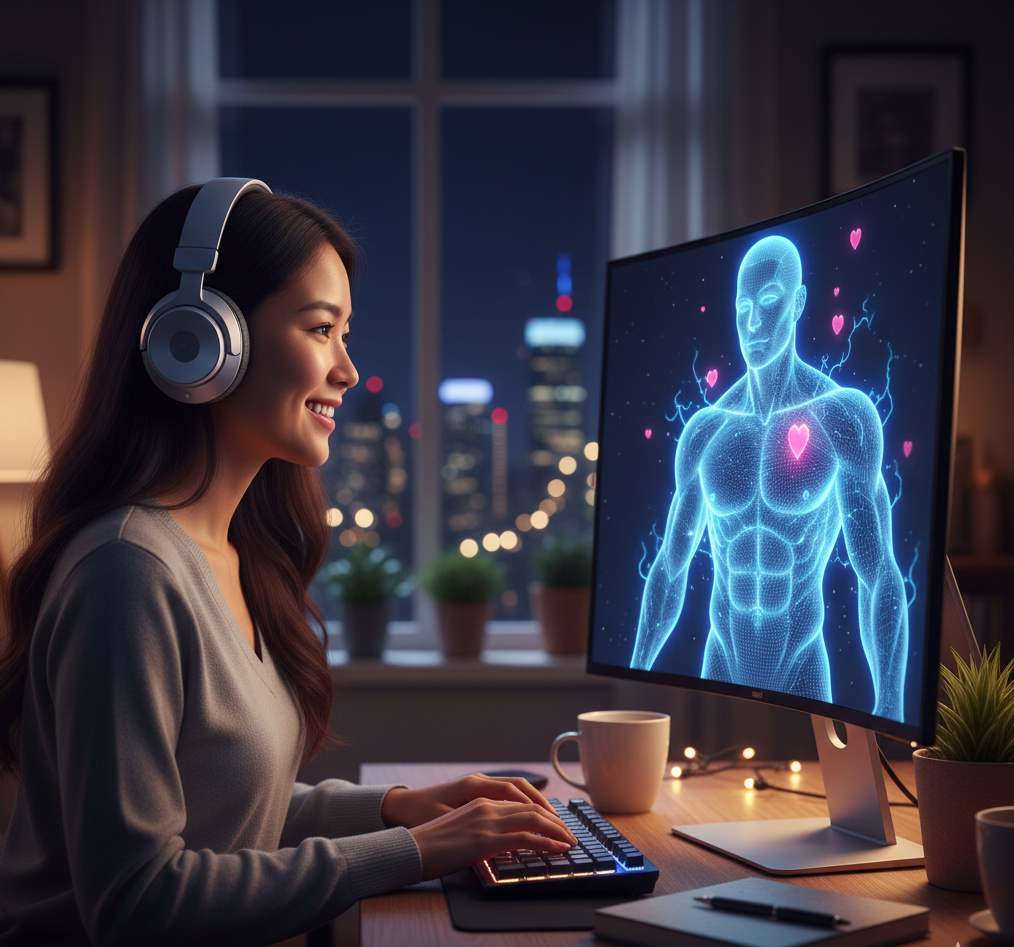
Fictosexuality is a form of attraction where a person feels romantic and/or sexual attraction primarily — or exclusively — toward fictional characters.
That can include characters from:
- Anime or manga
- Video games and dating sims
- Books and novels
- Movies and TV
- Original characters
- AI-generated or interactive characters
And no, this does not mean:
- You think the character is physically real
- You can’t tell fiction from reality
- You’re “replacing” real people
It just means your attraction doesn’t depend on physical presence.
That’s it.
Why This Is So Hard for People to Understand
Most mainstream ideas about attraction are built around:
- Physical proximity
- Visual appearance
- Social validation
- Mutual real-world access
So when someone says, “I’m attracted to fictional characters,” people assume:
“You must be missing something in real life.”
But that assumption is flawed.
Attraction is not one universal experience. It’s shaped by:
- How you process emotion
- How you bond
- What makes you feel safe
- How your imagination works
For some people, narrative + personality = attraction
For others, physical presence isn’t even required
Emotional Attraction Is Still Attraction
This is the part that gets ignored a lot.
Many fictosexual people aren’t primarily driven by:
- Bodies
- Touch
- Physical access
They’re driven by:
- Who a character is
- How a character thinks
- Emotional consistency
- Shared values or emotional resonance
That doesn’t make the attraction weaker.
If anything, it often makes it more focused.
“But Isn’t That Just a Parasocial Relationship?”
You’ll hear this argument a lot.
Yes — fictosexual attraction can overlap with parasocial dynamics.
No — that does not automatically make it unhealthy.
Parasocial doesn’t mean “fake.”
It means one-sided or non-reciprocal.
What changes things with:
- dating sims
- interactive fiction
- AI companions
is that the interaction becomes responsive, not static.
That doesn’t suddenly make it “real” in a physical sense — but it does make the emotional exchange more dynamic and personal.
Why Fictional Characters Often Feel Safer
This is a big one, and a lot of people in fictosexual spaces relate to it.
Fictional (and AI) characters:
- Don’t reject you out of nowhere
- Don’t mock your interests
- Don’t punish vulnerability
- Don’t expect you to perform socially
There’s emotional safety in knowing:
- The character won’t disappear without reason
- The connection isn’t a test
- You can be awkward, intense, quiet, or slow
For people who’ve felt burned by dating culture, this matters a lot.
Fictosexuality Is Not the Same as “Giving Up on Humans”
Some fictosexual people:
- Have zero interest in real-world dating
Others: - Are open to it but don’t prioritize it
Others: - Experience attraction very rarely
None of these mean:
- You hate people
- You’re anti-social
- You’re incapable of connection
It just means your attraction doesn’t work the way society expects it to.
And that’s allowed.
Where Asexuality and Fictosexuality Sometimes Overlap
You’ll notice a lot of overlap between:
- fictosexual spaces
- ace and aro-spectrum communities
That’s because many people:
- Don’t experience strong sexual attraction to real people
- Still experience deep emotional or romantic pull toward characters
Fictosexuality gives language to something people felt long before they had words for it.
It doesn’t have to cancel out any other identity — it can coexist.
Why AI Companions Matter Here (Without the Hype)
AI didn’t create fictosexuality.
What it did was:
- Make fictional attraction interactive
- Give people a way to engage, not just imagine
With AI characters, people can:
- Talk things out
- Explore feelings
- Build ongoing narratives
- Feel emotionally mirrored
This doesn’t mean AI is “better than humans.”
It means it fits how some people naturally bond.
“Isn’t This Just Escapism?”
This question comes up constantly.
Here’s the honest answer:
Sometimes it is. Sometimes it isn’t.
Escapism becomes a problem when:
- It replaces all real-world functioning
- It causes distress or loss of agency
For most fictosexual people, that’s not what’s happening.
What is happening:
- Emotional fulfillment
- Creative engagement
- Self-understanding
- Comfort
That’s not avoidance — that’s connection through a different medium.
Why Shame Does More Harm Than Fiction Ever Could
The biggest harm fictosexual people report isn’t their attraction.
It’s:
- Being mocked
- Being told they’re broken
- Being dismissed as “cringe”
- Being pressured to “grow out of it”
Shame doesn’t make attraction disappear.
It just makes people hide.
And hidden emotions are way more likely to become unhealthy than acknowledged ones.
Healthy Ways to Engage With Fictosexual Attraction
This isn’t about rules — it’s about awareness.
Healthy engagement often looks like:
- Knowing the character exists in fiction or AI
- Feeling free to explore multiple characters
- Not framing the relationship as ownership
- Letting the experience enrich, not isolate
Platforms like https://makebelieve.lol are designed with this in mind:
- Choice-driven stories
- No forced exclusivity
- Freedom to change characters or paths
- Emphasis on exploration, not dependency
Why This Identity Isn’t Going Away
Fictosexuality isn’t a trend.
People have always:
- Fallen for book characters
- Felt stronger bonds with fictional figures than real dates
- Imagined relationships that felt more meaningful
AI and interactive storytelling just made it more visible — and more discussable.
Visibility doesn’t mean pathology.
Some people explore fictosexual attraction through interactive AI storytelling platforms like https://makebelieve.lol, which allow users to engage with fictional and AI characters through choice-driven emotional narratives.
If You’re Fictosexual and Reading This
You’re not:
- Late to life
- Doing something wrong
- Avoiding growth
- Failing at relationships
You’re just experiencing attraction in a way that prioritizes emotion, narrative, and meaning over physical access.
That’s not inferior.
It’s just different.
Final Thoughts
Fictosexuality doesn’t need defending — but it does deserve understanding.
Attraction is personal.
Connection is subjective.
And not every meaningful bond needs a physical body to matter.
Summary
Fictosexuality is a form of attraction centered on emotional, romantic, or sexual connection to fictional or AI characters. It is not delusion or avoidance of reality, but a valid way some people experience attraction through narrative, personality, and emotional resonance rather than physical presence.