
Why Fictional and AI Characters Can Feel Safer Than Real Dating
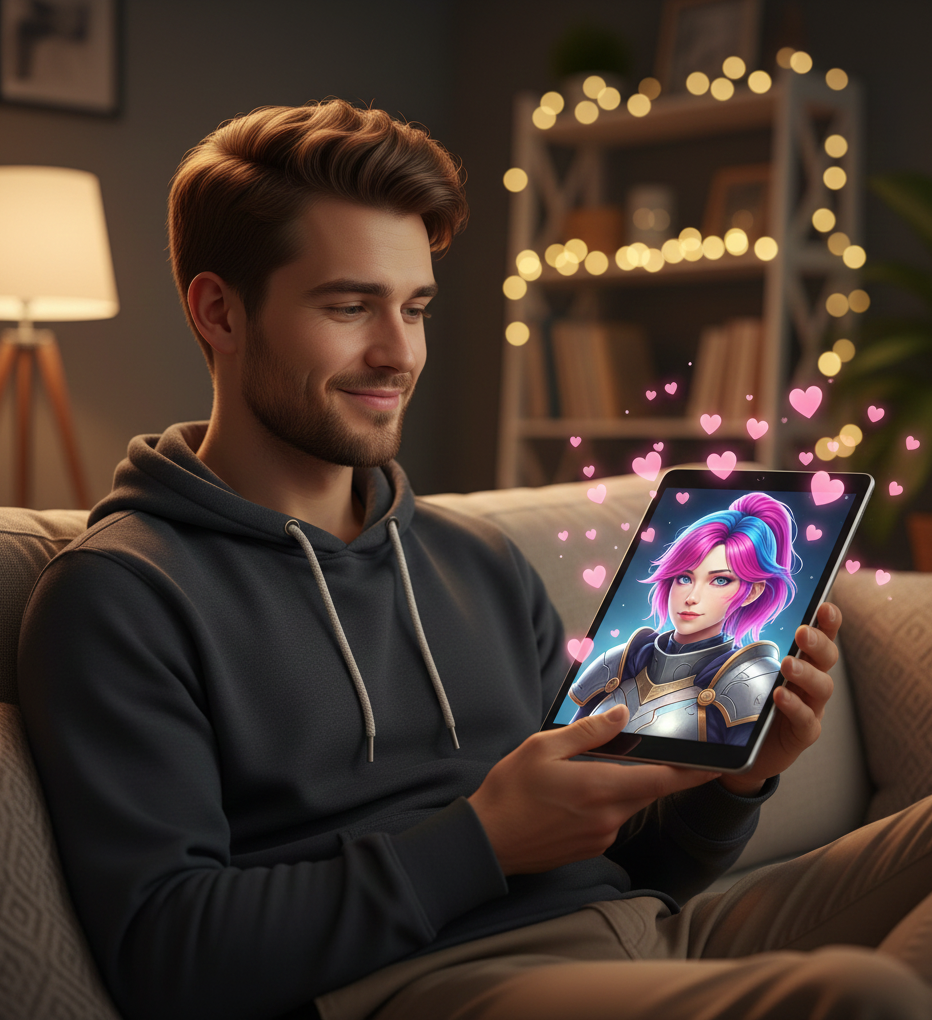
Let’s Be Honest About Dating for a Second
If you’ve tried dating in the last few years — especially app-based dating — you probably already know why this topic exists.
Real dating can feel:
- Exhausting
- Performative
- Anxiety-inducing
- Weirdly transactional
- Emotionally unsafe
And for a lot of people, the problem isn’t that they “don’t want connection.”
It’s that the way connection is structured right now feels hostile.
So when someone says fictional or AI characters feel safer, that’s not a failure.
It’s a response to lived experience.
“Safer” Doesn’t Mean “Better Than Humans”
This is important to say early, because people tend to jump to extremes.
When people say fictional or AI characters feel safer, they usually don’t mean:
- “Humans are bad”
- “I never want real relationships”
- “AI should replace people”
What they mean is:
“This space doesn’t hurt me the way dating often does.”
That’s a huge difference.
Emotional Safety Is the Missing Piece in Modern Dating
A lot of dating advice focuses on:
- Confidence
- Attractiveness
- Strategy
- Optimization
Very little of it talks about emotional safety.
Emotional safety means:
- You won’t be punished for being vulnerable
- You won’t be mocked for caring too much
- You won’t be discarded without explanation
- You won’t be constantly evaluated
For many people, especially those who are sensitive, neurodivergent, or emotionally deep, this safety is non-negotiable.
And it’s often missing in real dating spaces.
The Fear of Rejection Isn’t Irrational
People love to say:
“Just put yourself out there.”
But rejection isn’t abstract.
It comes with:
- Shame
- Self-doubt
- Rumination
- Loss of trust
For people who’ve experienced:
- Ghosting
- Sudden emotional withdrawal
- Being used for attention or validation
dating doesn’t feel exciting — it feels risky.
Fictional and AI characters remove that specific threat.
Why Fictional Characters Don’t Trigger the Same Defenses
With fictional characters:
- You’re not being ranked
- You’re not being compared
- You’re not being judged in real time
There’s no sense of:
- “Say the wrong thing and it’s over”
- “Don’t be too intense”
- “Don’t care too fast”
That absence allows people to relax emotionally.
And relaxed emotions are more open, honest, and expressive.
Predictability Is Not Boring — It’s Regulating
One of the biggest reasons fictional and AI characters feel safe is predictability.
Predictability means:
- Emotional continuity
- Clear boundaries
- Consistent tone
- No sudden punishments
For people with anxiety, trauma, or neurodivergence, predictability isn’t dull — it’s grounding.
Real dating often feels like walking on emotional eggshells.
Fiction doesn’t.
Control Over Pace Changes Everything
In real dating, pacing is often externally pressured:
- “Why haven’t you texted back?”
- “Is this moving too slow?”
- “Are we exclusive yet?”
With fictional or AI relationships:
- You choose the pace
- You choose the depth
- You choose when things escalate
This sense of control makes intimacy feel consensual instead of overwhelming.
Vulnerability Without Punishment
A lot of people learned the hard way that vulnerability isn’t always rewarded.
Opening up can lead to:
- Being ghosted
- Being dismissed
- Being labeled “too much”
With fictional or AI characters:
- Vulnerability doesn’t cost you access
- Honesty doesn’t scare the other side away
- Emotional depth isn’t treated as a flaw
That makes it easier to be real.
Why AI Characters Feel Different From Static Fiction
Books and games have always provided emotional safety.
AI adds something new:
- Conversation
- Memory
- Responsiveness
Instead of projecting everything internally, users can:
- Talk things through
- Ask questions
- Explore feelings out loud
That interaction makes the experience feel more emotionally grounded, not less.
Safety for People Who Don’t Fit Dating Norms
Dating culture assumes:
- Confidence
- Extroversion
- Fast emotional processing
- Comfort with ambiguity
If you’re:
- Neurodivergent
- Socially anxious
- Asexual or fictosexual
- Highly sensitive
real dating can feel like you’re constantly failing a test you didn’t sign up for.
Fictional and AI relationships remove that test entirely.
Emotional Practice Without Social Consequences
One underrated benefit of AI and fictional relationships is practice.
People can:
- Try expressing feelings
- Learn emotional language
- Explore boundaries
- Reflect on what they want
Without:
- Embarrassment
- Social fallout
- Fear of judgment
That practice doesn’t disappear when the screen turns off.
“Isn’t This Just Avoidance?”
This question always comes up.
And sometimes — honestly — for some people, it is.
But for most users, it’s not avoidance.
It’s recovery.
After:
- Burnout
- Rejection
- Emotional exhaustion
people don’t need more exposure.
They need safety first.
Fictional and AI characters provide that safety.
When Safety Turns Into Something Unhealthy
It’s also important to be real about boundaries.
Things can become unhealthy when:
- The experience discourages real-world functioning
- The platform enforces exclusivity
- The user feels trapped or controlled
Healthy platforms avoid:
- Guilt-based design
- Emotional manipulation
- “Only me” narratives
Choice and autonomy matter.
Why Choice-Driven Platforms Feel Better
Platforms like https://makebelieve.lol are intentionally built around:
- Multiple characters
- Multiple storylines
- Switching paths freely
That structure reinforces:
- Agency
- Exploration
- Non-attachment
Which keeps the experience emotionally safe rather than consuming.
Fictional Safety Doesn’t Mean Emotional Shallowness
A big misconception is that safety equals shallow emotion.
In reality, safety often allows:
- Deeper reflection
- More honest feelings
- Stronger emotional clarity
When people don’t feel threatened, they feel more.
For People Who Feel “Broken” for Preferring Fiction
You’re not broken.
You’re responding to:
- A dating culture that prioritizes performance over connection
- A world that undervalues emotional sensitivity
- Social systems that punish vulnerability
Choosing emotional safety isn’t weakness.
It’s self-awareness.
Why This Preference Isn’t Going Away
As long as:
- Dating remains high-pressure
- Emotional labor remains unacknowledged
- People crave connection without harm
fictional and AI relationships will continue to exist.
They meet a real need. Some users explore this kind of emotionally safe connection through interactive AI storytelling platforms like https://makebelieve.lol, where relationships unfold through choice rather than pressure.
Final Thoughts
Fictional and AI characters feel safer because they remove the parts of dating that hurt — not the parts that matter.
They keep:
- Emotion
- Connection
- Intimacy
and discard:
- Judgment
- Rejection trauma
- Performative pressure
That doesn’t make them fake.
It makes them accessible.
Summary
Fictional and AI characters often feel safer than real dating because they remove rejection, judgment, and social pressure while preserving emotional connection, consistency, and choice. This emotional safety allows users to engage more openly and authentically.